As the famous Chinese proverb goes, a journey of a thousand li begins with a single step. For the KAMAZ-master team, the road to the Taklamakan Rally began long before the race kicked off on Saturday, and it was not without its surprises.
On May 5, a convoy of racing trucks and assistance vehicles departed from Naberezhnye Chelny, heading for the city of Ürümqi in the Xinjiang Uygur Autonomous Region. The drivers and the main part of the team traveled to the race, a debut event for the KAMAZ squad, flying out of Moscow on a scheduled flight. However, the planned rendezvous at the bivouac in China did not take place on the scheduled day.
Russian rally participants, including not only the Kamaz team but also the Ural Motorsport trucks and Sergey Karyakin, who is competing in the SSV category were delayed for several days at the Kazakhstan-China border. Consequently, they missed out on dune testing and lost the opportunity to fully evaluate their trucks under race conditions. Such practice would have been invaluable for young pilots Bogdan Karimov and Almaz Akhmedov, neither of whom had previously competed in majestic dunes towering hundreds of meters high.
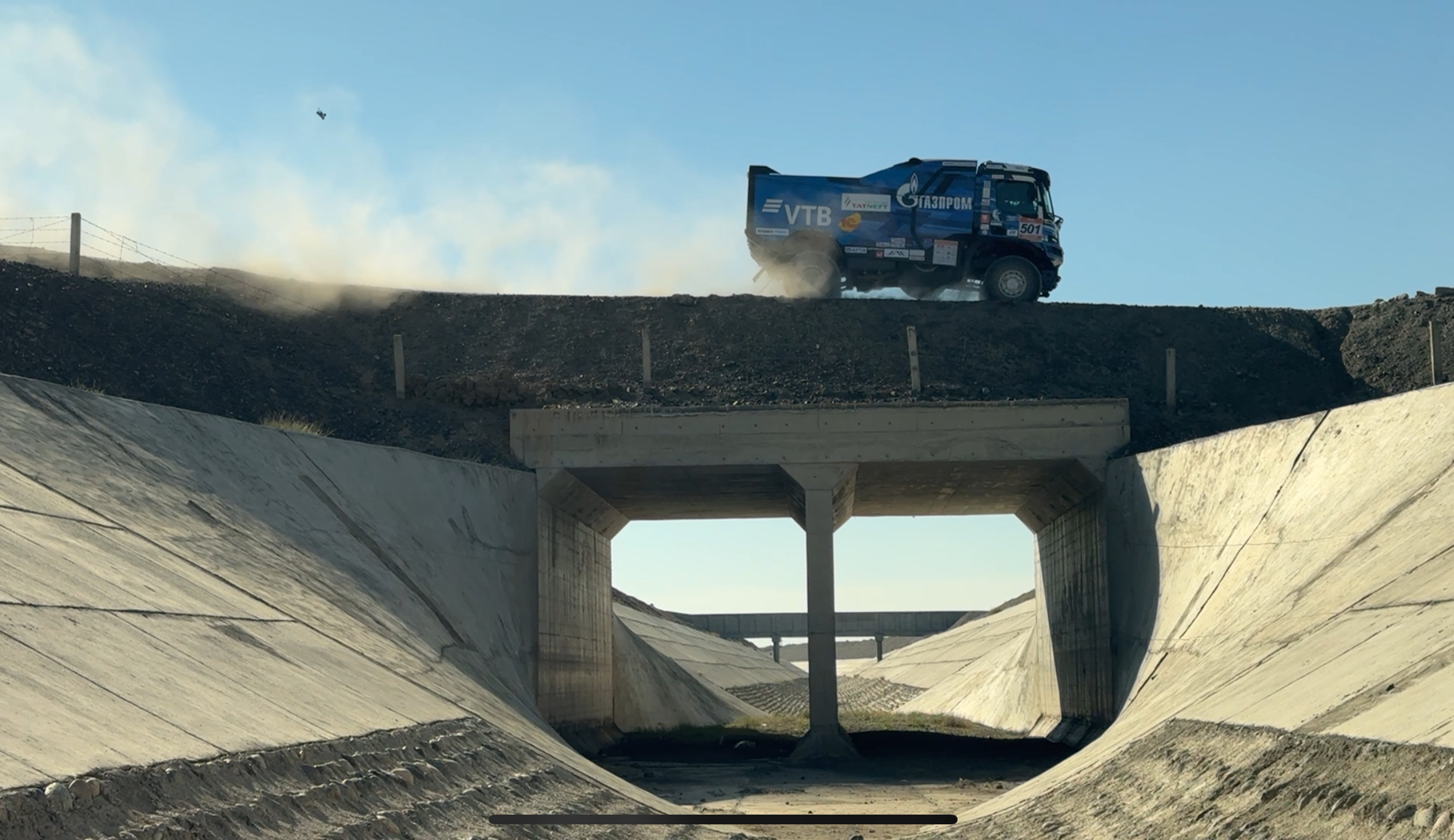
Naturally, the delay of the trucks made the entire team nervous. However, these unexpected logistical challenges had no impact on the mandatory administrative checks required for every race. First, the crews, comprising Bogdan Karimov, Dmitry Nikitin, and Ilgiz Akhmetzyanov, as well as Almaz Akhmedov, Ivan Malkov, and Anton Shibalov, obtained local truck's licenses (driving in China with a Russian license is strictly prohibited) and subsequently successfully completed the pre-start procedures.
Then came a tense wait for news from customs. And at the very last moment—just a day before the start of the Taklamakan 2026 rally—good news arrived: the two blue-liveried racing trucks had been cleared to proceed. After a final 1,000-kilometer dash, the trucks’ driven by Bogdan Karimov and Almaz Akhmedov arrived at the site well past 2:00 a.m. local time. The long-awaited reunion of the two Kamaz teams was a truly heartwarming occasion!
In rally-raids, challenging situations requiring split-second decisions arise regularly, and the KAMAZ-master team is always prepared for such twists. Without wasting precious time, the team immediately set about inspecting and preparing the trucks for the morning's scrutineering—a mandatory step for competition clearance. Ultimately, the organizers granted permission to start the Taklamakan 2026 rally. The KAMAZ-master team is ready for its debut race in China!
During the day (with a five-hour time difference from Moscow), the ceremonial start of the Taklamakan 2026 international rally took place. This year, several hundred competitors and around 150 vehicles have entered the race. In the truck category, the battle for top positions will be contested by nine crews. As a warm-up stage, the pilots had to complete a 25-kilometer prologue to determine their starting positions for the first full special stage.
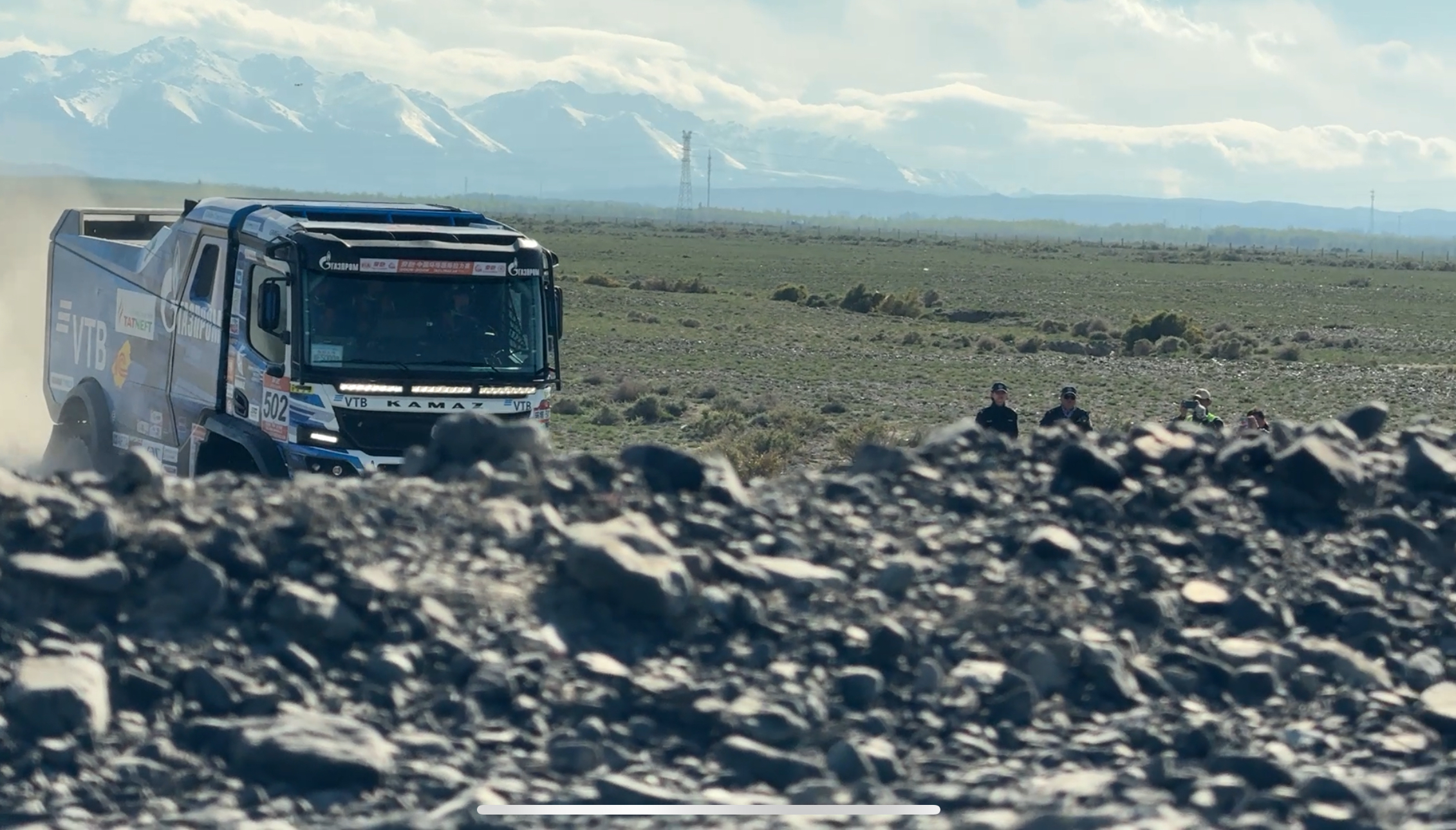
The gravel course in the scenic Tianshan Grand Canyon area proved quite fast, yet, despite the dry weather, it was slippery in places due to the abundance of loose stones. Pilots had to struggle to keep their trucks from sliding off the track at high speeds. Co-pilots also had to adapt to the conditions of a foreign race and to Chinese instrumentation. Navigation at the Taklamakan Rally does not rely on pre-set GPS tracks, making the ability to read the road book quickly, clearly, and accurately a crucial asset in the competition. Both KAMAZ-master crews successfully rose to the challenge.
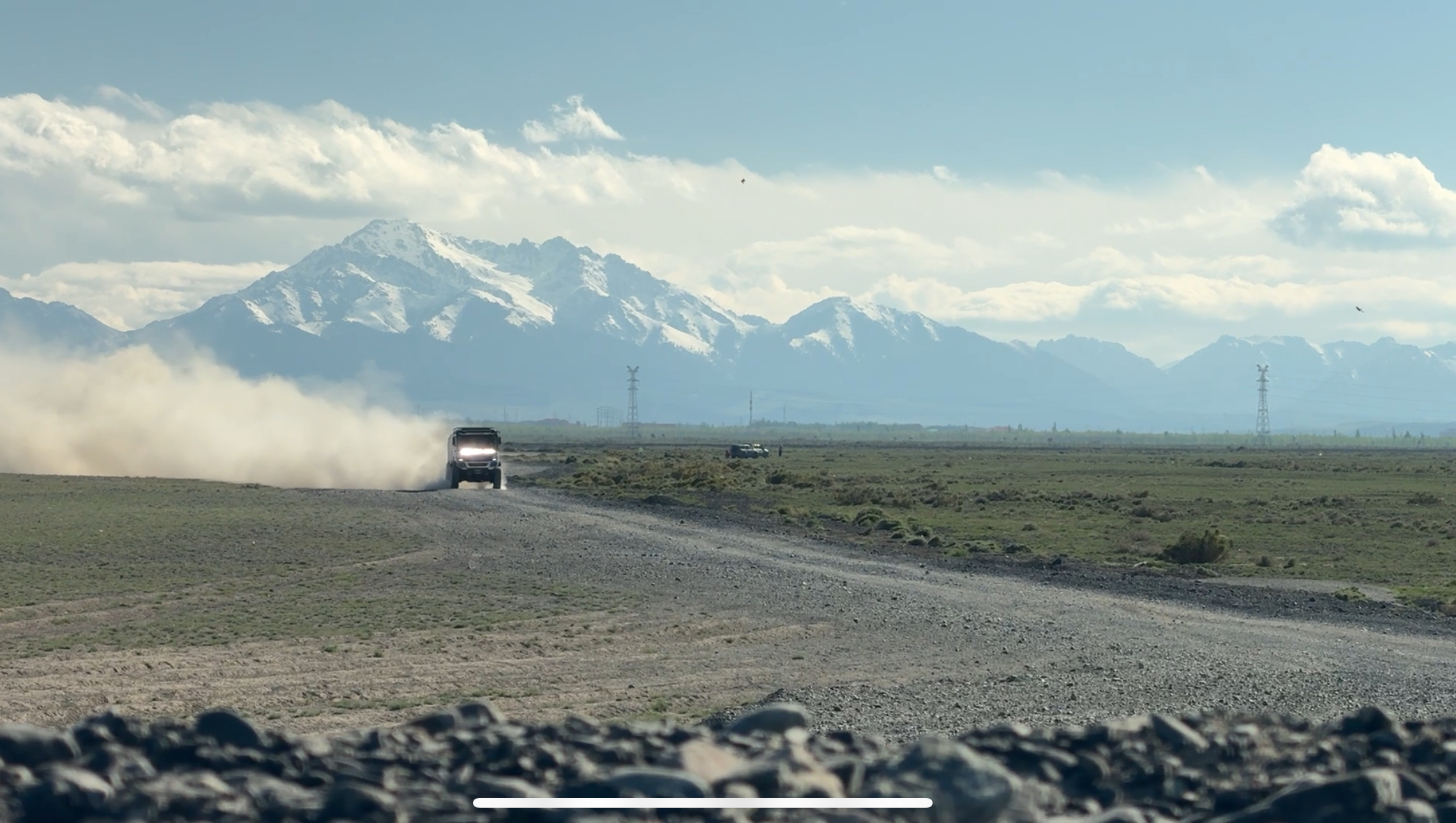
Eduard Nikolaev, Head of KAMAZ-master team: "I congratulate all our crews on their debut at the Taklamakan Rally and the start of the race! After finishing the prologue, the main task is to get feedback from the crew members to understand the vehicles' behavior and condition, as well as the nuances of the course because, unfortunately, due to certain circumstances, the team did not have the opportunity to conduct pre-race tests."
The guys realize it’s a long race; there’s no need to chase a result on the very first day. It’s important to settle in, get a feel for the local tracks, and assess the car setups. This will allow us to make adjustments, as a demanding 230-kilometer special stage awaits the crews tomorrow and that’s when we’ll really need to step up our game. I wish us all the team, the fans, and our partners a successful race.
Almaz Akhmedov, pilot of crew No. 501: "The prologue was fast and high-speed. The course was rocky and, in places, very slippery. We didn't have any test runs, so we had to ease into it at first and get a feel for the truck. Everything went well today; we’re happy to have started the rally."
Anton Shibalov, mechanic for crew No. 501: "It was a short, high-speed stage, and we didn't have any navigation issues. I wouldn't say we faced any major difficulties today, though there were some tricky spots. There wasn't any really tough off-road terrain—mostly straight stretches with small bumps—but we did encounter a few hazardous sections with ravines. You don't win a race in the prologue, but any risk or mistake could lead to unpleasant consequences right at the start of a multi-day rally. So, we tried to drive carefully, maintaining a good, steady pace. And, of course, we aren't talking about a speed of 60 km/h."
Bogdan Karimov, pilot of crew No. 502: "We slept less than usual today—we were receiving the trucks overnight and preparing them for inspections. Everything went according to plan. As for the prologue, the track surface was quite firm with winding turns, and we drove through heavy dust right from the start. Small stones were scattered all along the route, causing the truck to drift a bit in the corners, so we drove very cautiously and didn't take any risks. Today was mostly about settling into the Chinese terrain and getting used to the navigation equipment; we’ve never used this type before, and there are certain ends and outs to it."